
Baby growth spurts: feeding changes, ages and support
What parents mean by a growth spurt, the ages mentioned by AFPA, how to respond to feeding cues and when changes need medical attention.

Your baby may suddenly ask to feed more often or seem unsettled after a previously familiar routine. Parents often call a few days like this a “growth spurt”. The term can describe an experience, but it should not be used to diagnose why a baby is hungry, distressed or sleeping differently.
What does growth spurt mean here?
In an expert answer about breastfeeding, AFPA describes periods of increased demand lasting a few days. Frequent, effective breastfeeding stimulates milk production. This provides useful context for more frequent feeds, without proving that every change is harmless or has the same cause.
Feeding effectiveness, health and growth still matter. If you are worried that milk intake is inadequate, a midwife, lactation professional or doctor can observe a feed and assess the wider situation. A calendar cannot answer that question.
With formula feeding, respond to hunger and fullness cues and follow advice on appropriate amounts. Do not change the powder-to-water ratio or assume there is no limit to the amount that should be offered.
Ages mentioned in AFPA’s guidance
AFPA’s expert answer mentions periods around three and six weeks, then three and six months. These are indicative observations, not a universal timetable.
| Approximate age mentioned | How to interpret it |
|---|---|
| Around 3 weeks | A possible period of more frequent breastfeeding |
| Around 6 weeks | Another possible period of more frequent breastfeeding |
| Around 3 months | More frequent feeds may occur for a few days |
| Around 6 months | Feeding may change while other aspects of the diet and routine are also developing |
Your baby may not follow these approximate ages. Do not dismiss a concern because it happens at a listed age, or assume a problem because it happens at another age.
What can you observe?
Record what actually happens rather than trying to identify a syndrome: requests to feed, effective sucking and swallowing, how much formula was taken if relevant, wet nappies, comfort and alertness.
Shorter naps, wanting contact or fussiness can have many explanations. Together they still do not confirm a growth spurt. A record can help you describe the change to a professional, but it cannot distinguish normal variation from illness by itself.
How many breastfeeds a day explains the usual early feeding pattern and its variation. If sleep is your main concern, sleep patterns by age gives broader context without assigning every waking to growth.
How long should you expect changes to last?
AFPA describes a few days in its expert answer. That is not a reason to wait a week before asking for help, nor a promise that the previous routine will return immediately.
If feeding changes persist, worry you, or come with signs that your baby is unwell, seek medical advice without waiting for a fixed number of days. A professional can assess whether feeds are effective and whether growth and hydration are satisfactory.
In its breastfeeding example, AFPA explains that changes in breast texture can be normal; softer breasts alone do not establish a fall in milk supply.
Supporting feeding and getting rest
If you breastfeed, offer the breast in response to your baby’s cues. More frequent effective feeds help stimulate milk production. If you are concerned about intake or considering a supplement, ask a qualified health professional to assess feeding and growth. Supplements may be needed in some situations; the label “growth spurt” should not prevent that assessment.
For formula feeds, follow hunger and fullness cues and advice on appropriate amounts. A baby who turns away may be full or need a pause. Persistent refusal or very poor intake deserves medical advice.
Accept practical help where possible. Another caregiver can bring food and water, handle household tasks, change nappies or comfort the baby while you rest. Contact and reassurance can be offered without treating them as evidence of a particular diagnosis.
When it may be something else
Ask for advice about persistent feeding changes, pain, unusual crying, a clear change in growth or wet nappies that are noticeably fewer than usual.
For a breastfed baby feeding well, AFPA describes 5–6 heavily wet nappies a day from day four or five. This is a reassuring sign, not a diagnostic cutoff. Your baby’s usual pattern and other symptoms matter too.
Seek medical advice immediately if your baby is unusually drowsy, difficult to wake, less responsive or passing very little urine. For signs of severe dehydration, altered consciousness or a baby who seems seriously unwell, call emergency services: 15 or 112 in France, or your local emergency number elsewhere.
The doctor interprets growth measurements with feeding and examination. Understanding growth charts explains why an isolated number is not the whole picture. Milk amounts by age and weight provides broad references, with their limitations.
PetitNid is not a medical device. If you are unsure, speak to your baby’s doctor.
Frequently asked questions
How can I tell if my baby is having a growth spurt?
More frequent feeding may be described as a growth spurt, but feeding changes, unsettled behaviour or different sleep do not establish the cause. Ask for medical advice if you are worried or your baby seems unwell.
How long does a growth spurt last?
In an expert answer about breastfeeding, AFPA describes these periods as lasting a few days. This is not a guarantee for every feeding change. If changes persist, worry you or come with signs of illness, seek advice without waiting for a fixed number of days.
What should I do if I am breastfeeding?
Offer the breast in response to your baby’s cues. Frequent effective feeds help stimulate milk production. If intake concerns you or you are considering supplements, ask a qualified professional to assess feeding and growth rather than assuming either that supplementation is necessary or that it can never be needed.
In the PetitNid app
Track feeds without counting in your head.
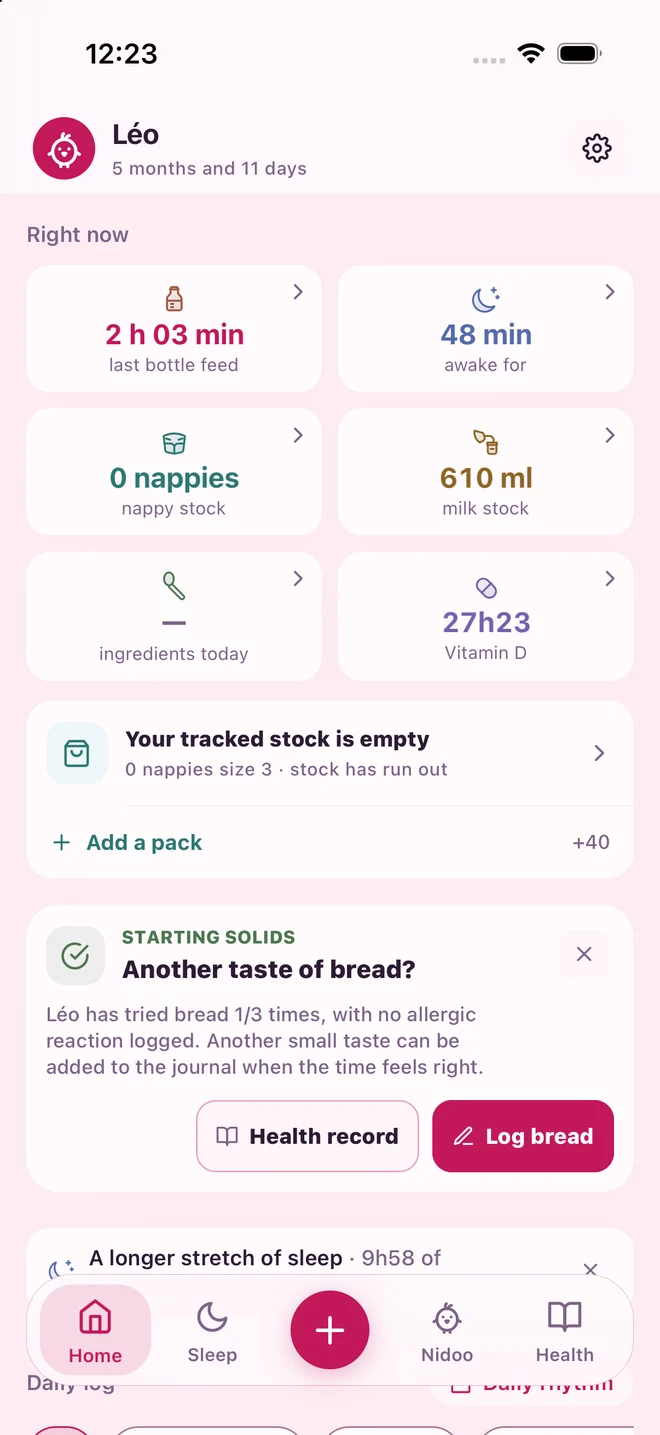
A timer tracks a breastfeed or bottle, with breast side and amount drunk. The home screen shows time since the last feed and how much milk is left in stock.
Breastfeeding and bottle tracking are free. Milk stock insights are part of Premium.
Explore breastfeeding and bottle tracking

Sources checked
Consulted when writing and reviewing this guide. French sources are identified by their original organisation names.
You don’t have to remember everything.
Download PetitNid to log breastfeeds, breast side and bottles. Feed tracking is free, and the other parent can see what you log.