
Introducing food allergens and understanding the 14 EU categories
French guidance on introducing food allergens, suitable forms, the 14 EU labelling categories and symptoms that need prompt or emergency help.

Introducing food allergens can feel worrying, especially when advice from different generations conflicts. The French recommendations described here favour introducing major allergens once complementary feeding begins, then continuing foods that are tolerated.
This guide follows French recommendations. If you live elsewhere, check the local guidance with the healthcare professional who follows your baby. Before starting, seek medical advice if your baby has severe eczema, a known food allergy or a previous reaction. General guidance is not a home challenge plan for a suspected allergy.
Why not routinely delay allergens?
Older advice often recommended delaying foods such as egg, peanut or fish. French recommendations now advise introducing major allergens without delay once complementary feeding has begun, including for babies with a family history of allergy.
ANSES’s 2018 food-allergy assessment discusses evidence including the LEAP trial. LEAP concerns early peanut introduction and peanut-allergy risk in high-risk children; its findings should not be expanded into a promise that early introduction prevents every food allergy.
ANSES highlights dairy foods, egg and peanut. AFPA similarly advises against routine delay solely because of family history. Once a food is tolerated, continue offering it regularly as advised. A single taste is not a guarantee of lasting tolerance, and a reaction calls for a medical plan.
The 14 EU food-labelling categories
EU food labelling rules identify 14 categories of substances or products that can cause allergies or intolerances. This is a labelling list, not a checklist of foods to introduce to a baby.
| Category | Examples of where it may appear |
|---|---|
| Cereals containing gluten, including wheat, rye, barley and oats | Bread, pasta, semolina and baked foods |
| Eggs | Egg and foods made with it |
| Peanuts | Peanut paste or peanut-containing foods |
| Milk | Milk, yoghurt, cheese and other dairy foods |
| Nuts | Almonds, hazelnuts, walnuts, cashews and other listed nuts |
| Fish | Cod, hake, salmon and fish-containing foods |
| Crustaceans | Prawns and crab |
| Molluscs | Mussels, oysters and other molluscs |
| Soybeans | Tofu and soy-derived ingredients |
| Sesame | Tahini and sesame-containing foods |
| Celery | Soups, stocks and prepared foods |
| Mustard | Seasonings and prepared foods |
| Lupin | Lupin flour in some breads or baked foods |
| Sulphur dioxide and sulphites | Some dried fruit and prepared foods |
The table identifies labels, not serving suggestions. French guidance advises against soy products before three years. Do not give raw shellfish to young children: ANSES includes children aged 0–5 years in that precaution. Whole nuts and other hard forms are choking hazards.
Offering foods in practice
Once any individual medical precautions have been discussed:
- Offer one new allergen at a time, in a small amount and a texture your baby can manage.
- Choose a time when you can observe your baby afterwards. Immediate allergic reactions usually develop within two hours, often within 20–30 minutes. Timing alone does not rule out an allergy; do not treat 30 minutes as an all-clear point.
- Continue offering tolerated foods regularly as advised.
- Adapt the form. Never offer whole peanuts or nuts to a baby; the cited French guidance avoids them before five years because of choking risk.
For peanut, use a small amount of smooth paste without added salt or sugar, thinned with water or mixed into a suitable purée. Do not offer a thick sticky spoonful. Nuts can be offered only in an appropriately smooth or finely ground form mixed into food, with individual advice if needed.
Always cook eggs thoroughly. ANSES includes children aged 0–5 years in its food-safety advice against raw or undercooked eggs. Cook fish and other animal foods thoroughly too.
A dated food diary can help you remember what was offered, in what form and whether symptoms appeared. For the broader start of complementary feeding, see when and how to start solids.
Eczema and family history
Family history alone does not lead French guidance to recommend routinely postponing major allergens. Severe eczema, a known allergy or a previous reaction requires a more individual approach before introduction.
AFPA stresses treating eczema, particularly on the face. Inflamed skin and contact with food are part of the discussion about sensitisation; applying food to the skin is not a test for whether it is safe to eat.
Your doctor or allergy specialist may recommend a particular plan or a supervised introduction. Do not reoffer a food after a suspected reaction until you have medical advice.
Breastfeeding has benefits, but this guide does not promise that it prevents food allergy. Do not begin a preventive exclusion diet during pregnancy or breastfeeding without appropriate professional advice. A varied diet is the general recommendation unless an individual condition requires otherwise.
Keeping introductions manageable
| Stage | Practical approach |
|---|---|
| Beginning complementary feeding in the French recommended window | Start suitable foods and discuss introduction of major allergens without unnecessary delay |
| Further introductions | One new allergen at a time, in a small, appropriate form |
| Ongoing meals | Continue foods already tolerated, following any medical plan |
Milk remains important alongside solids. ANSES gives at least 500 ml of milk daily until at least one year in its feeding references; breastfeeding continues responsively and does not need to be measured in millilitres. Discuss the overall diet with your baby’s professional.
A record can help you offer foods your baby already tolerates regularly, even when routines change. It is an organisational aid, not a guarantee against allergy.
Recognising a reaction
Immediate reactions usually develop within two hours, often within 20–30 minutes, but timing alone does not rule out an allergy. Possible signs include redness, hives, swelling of the lips, eyelids or face, abdominal pain, repeated vomiting or diarrhoea.
Stop offering the suspected food and seek medical advice before reintroducing it. A clinician determines the diagnosis. Do not test the food again at home to see whether the symptoms recur.
Call emergency medical services immediately for difficulty breathing or wheezing, marked swelling of the tongue or throat, pronounced pallor, major weakness, collapse or loss of consciousness. Reacting in several parts of the body at once—for example skin symptoms together with breathing symptoms—also needs urgent help. In France, call 15; elsewhere, call your local emergency number. Follow an existing allergy emergency plan if your baby has one.
Record the food, amount, time and symptoms to help the medical team, but do not delay seeking help to complete the record.
PetitNid is not a medical device. If you are unsure, speak to your baby’s doctor.
Frequently asked questions
When should food allergens be introduced?
French guidance advises introducing major allergens without delay once complementary feeding has started within its four-to-six-month window. Seek medical advice first for severe eczema, a known allergy or a previous reaction. Follow local guidance outside France.
Does a family history of allergy mean delaying allergens?
French ANSES and AFPA guidance does not advise routine delay solely because of family history. Discuss the situation with your baby’s doctor, especially if your baby has severe eczema or has already reacted to a food.
What are the 14 EU allergen categories?
They are cereals containing gluten, crustaceans, eggs, fish, peanuts, soybeans, milk, nuts, celery, mustard, sesame, sulphur dioxide and sulphites, lupin and molluscs. This is a labelling list, not a list of foods every baby should be given.
How can peanut be offered in an appropriate form?
Never give whole peanuts or nuts to a baby. A small amount of smooth peanut paste without added salt or sugar can be thinned and mixed into a suitable food, following professional advice where needed. Do not offer a thick sticky spoonful or reintroduce a food after a reaction without medical advice.
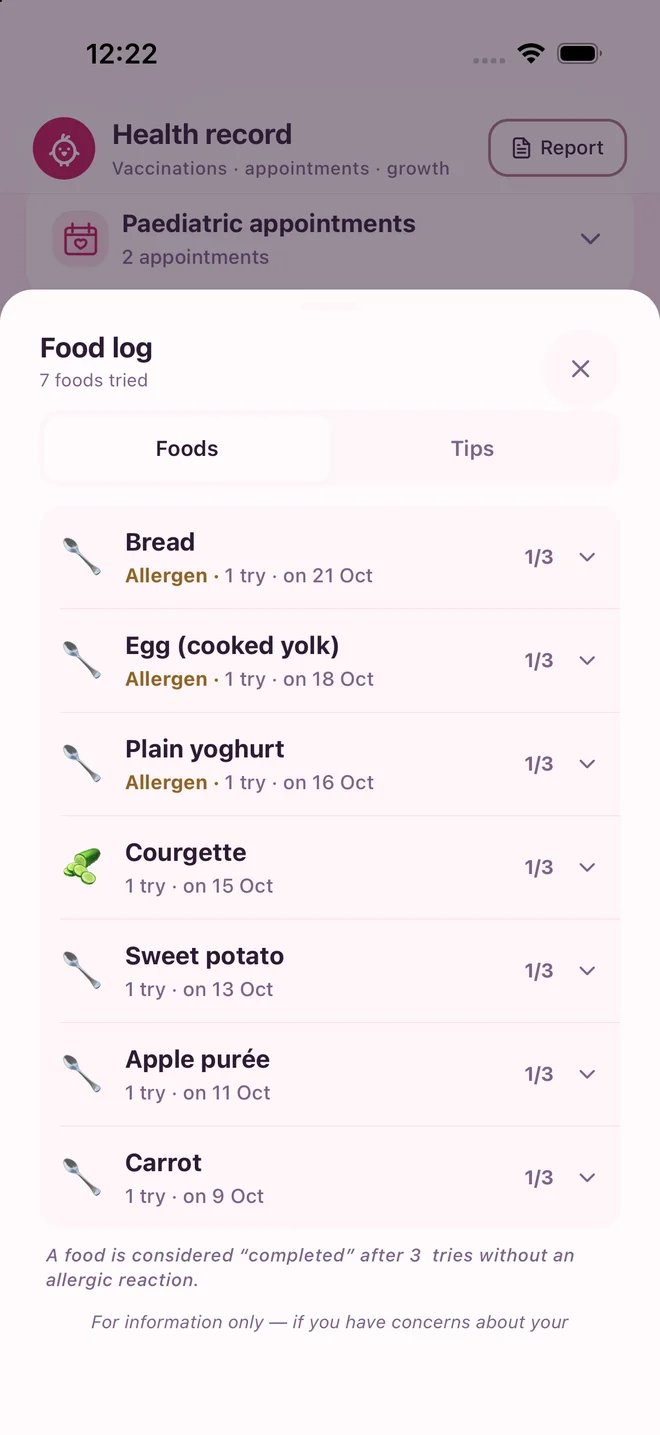
In the PetitNid app
Foods tried and 14 allergens, in one diary.
Log each new food with any reaction observed. The diary keeps foods your baby has tried and tracks the EU’s 14 food labelling allergens. This tracking list is not a recommendation to introduce every item.
Logging a meal stays free. The food and allergen diary is part of Premium.
Explore the food diary

Sources checked
Consulted when writing and reviewing this guide. French sources are identified by their original organisation names.
- Santé publique France — French PNNS guide to complementary feeding
- AFPA (mpedia.fr) — Preventing allergies
- AFPA (mpedia.fr) — Food allergies in children
- AFPA (mpedia.fr) — Introducing food allergens: expert answer
- ANSES — Nutrition guidance for children aged 0–3 (2019)
- France’s 1000 First Days — Starting solid foods between 4 and 6 months
- Assurance Maladie (ameli.fr) — Food allergy: symptoms and emergencies
- ANSES — Food allergies: ANSES assessment (2018)
You don’t have to remember everything.
Download PetitNid to keep your baby’s meals in their journal. Meal tracking is free; the food and allergen diary is part of Premium.